Back to Blogs

What Are Bone Grafts and When Do You Need One?

Bone grafting restores lost jawbone density and volume, creating a healthy foundation for lasting dental implants.

November 1, 2026
•
5 min read
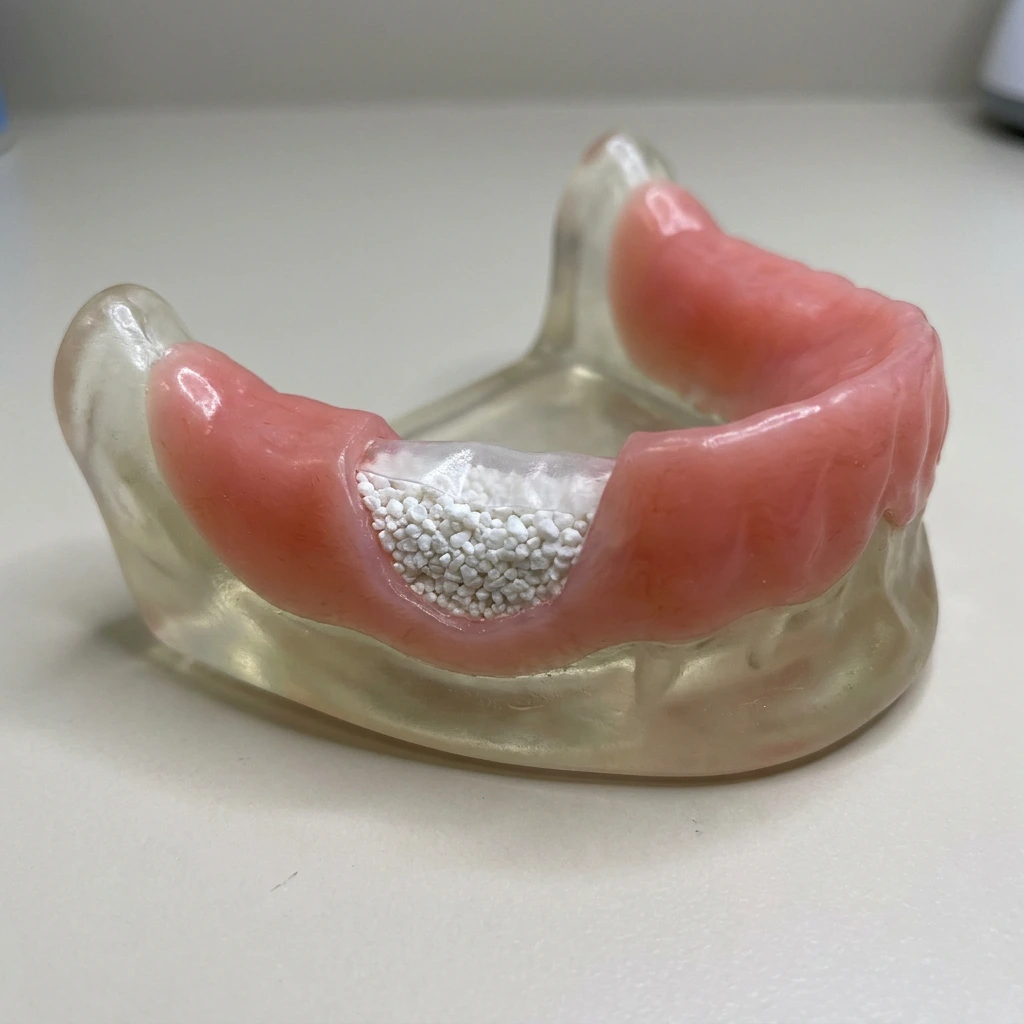
A transparent dental model of a lower jaw shows pink gums with white bone graft granules placed in a localized ridge defect under a clear membrane.

Understanding Dental Bone Grafts and Jaw Health

More dental patients today are asking about regenerative care as tooth replacement methods advance. A dental bone graft is a specialized minor surgical treatment that rebuilds diminished jawbone tissue to create a sturdy, healthy foundation for restorative solutions.

The technique restores lost volume, encourages new cell regeneration, and protects surrounding teeth from destabilizing over time.

Brittany, an active professional in her late thirties, visited iSmile Dental Fairfax after living with an empty space in her lower jaw for several years. She had postponed replacing a missing first molar after an old extraction. Now, she wanted a fixed tooth replacement to chew comfortably again.

During her initial exam, Dr. Taimour Raja evaluated her oral health and noticed visible bone shrinkage along her lower ridge. Brittany wondered whether she had waited too long for treatment. He reassured her that modern bone grafting could renew the supportive foundation her jaw needed.

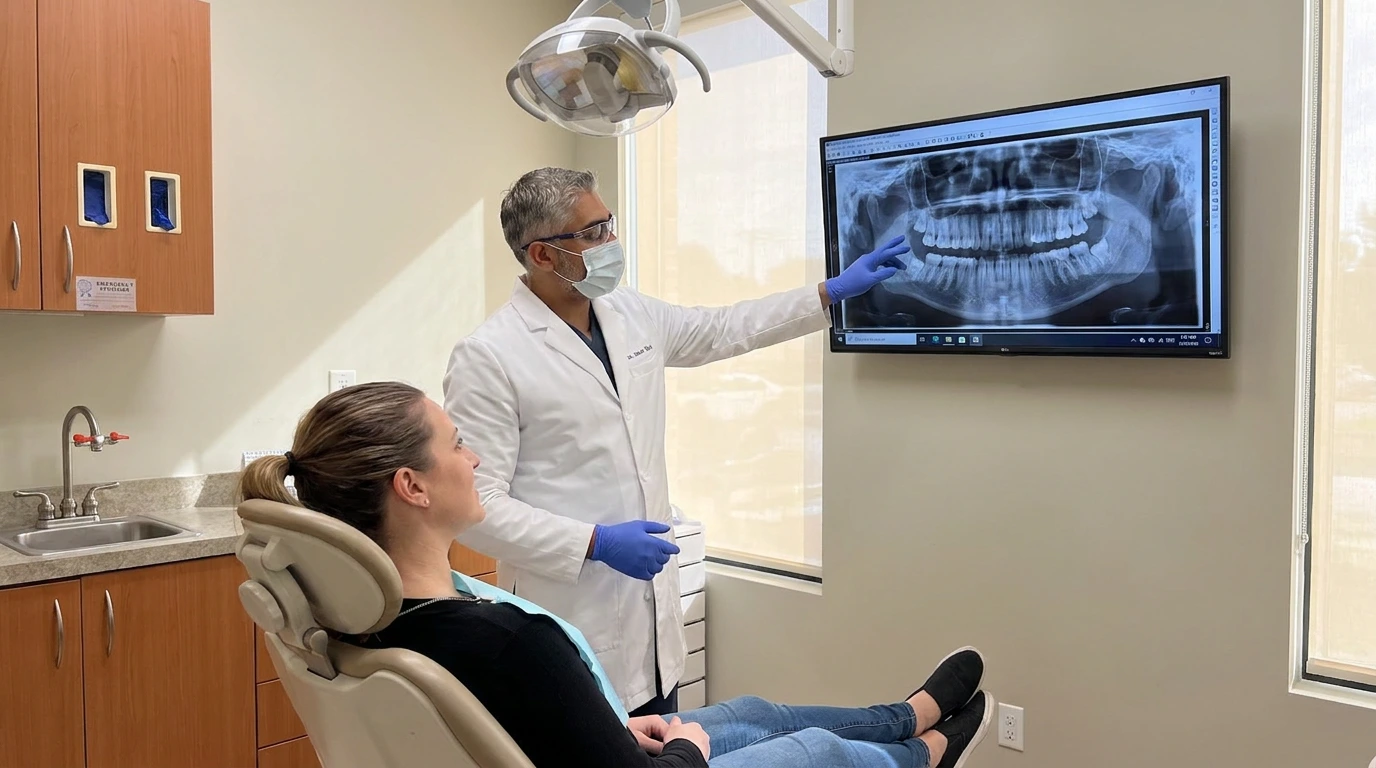
Taimour, wearing a face mask and white coat, points to a panoramic dental X-ray on a wall monitor while reviewing it with a patient in an exam chair.

What Is a Dental Bone Graft Procedure?

A dental bone graft procedure involves placing biocompatible material into areas of the jaw where bone tissue has degraded. Once positioned, this material acts as an internal biological scaffold that guides natural bone cells to reproduce and fill the deficit. Over several months, natural cellular growth replaces the grafting material with solid living bone.

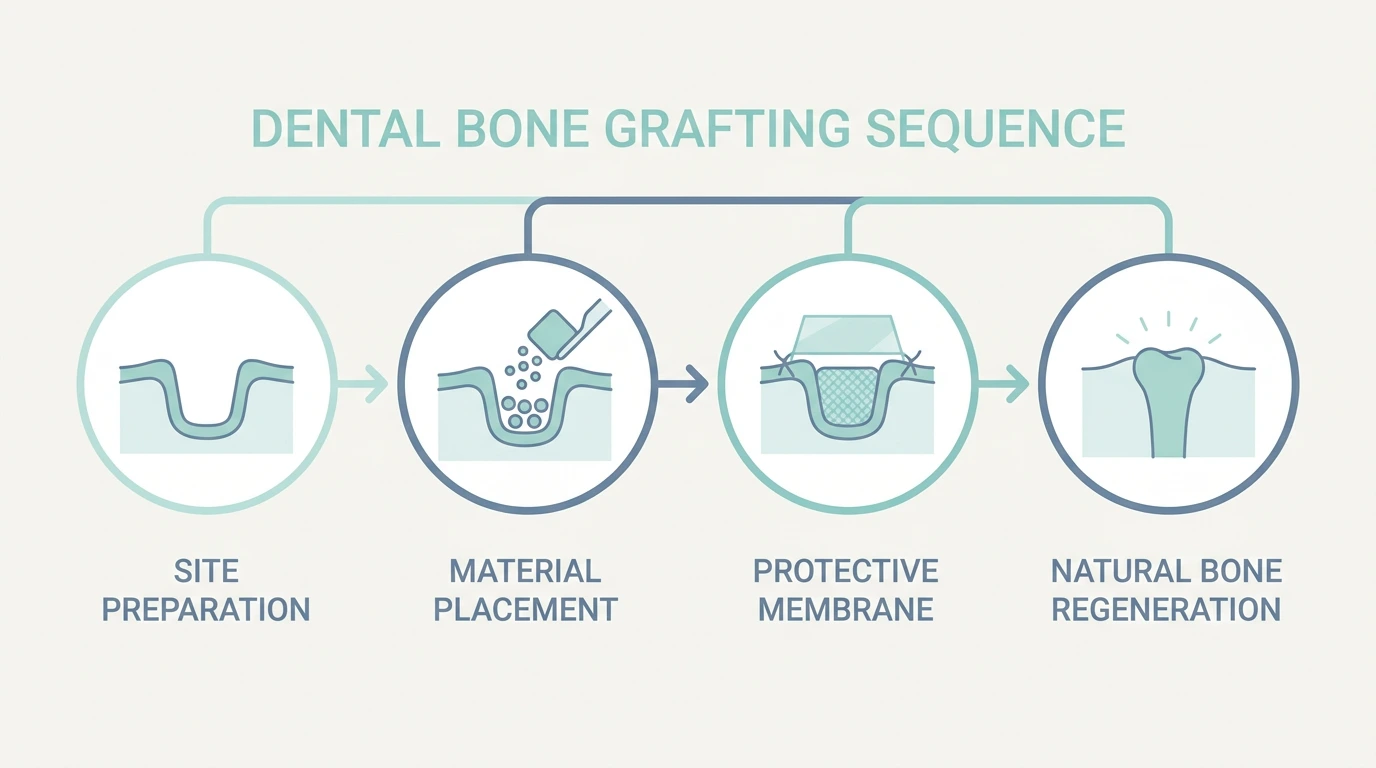
Dr. Taimour Raja explained each phase of the plan to Brittany so she understood how her jaw would regenerate. The clinical steps follow a predictable and gentle sequence:

  • Site preparation: The dentist gently accesses the target area and thoroughly cleanses the surrounding bone to ensure a sterile healing environment.
  • Material placement: Carefully selected graft particles are placed precisely within the bone defect to recreate natural ridge contours.
  • Membrane protection: A specialized protective collagen barrier covers the site to prevent soft gum tissue from encroaching into the bone space.
  • Surgical closure: Dr. Raja carefully repositions the gum tissues over the site using delicate dissolvable sutures to support uncomplicated healing.

Brittany felt relieved learning the process was straightforward and conducted under comfortable local anesthesia. The dentist noted that most patients feel only mild pressure during the brief visit.

Four circular icons illustrate the dental bone grafting sequence, labeled site preparation, material placement, protective membrane, and natural bone regeneration.

What Are the Main Types of Bone Grafts?

Bone graft materials are categorized by their biological source, and each type provides a safe framework for natural osteogenesis. Modern regenerative dentistry relies on well-tested, sterile materials that encourage the body to rebuild bone predictably. Choosing the right source depends on anatomical location, defect size, and patient health.

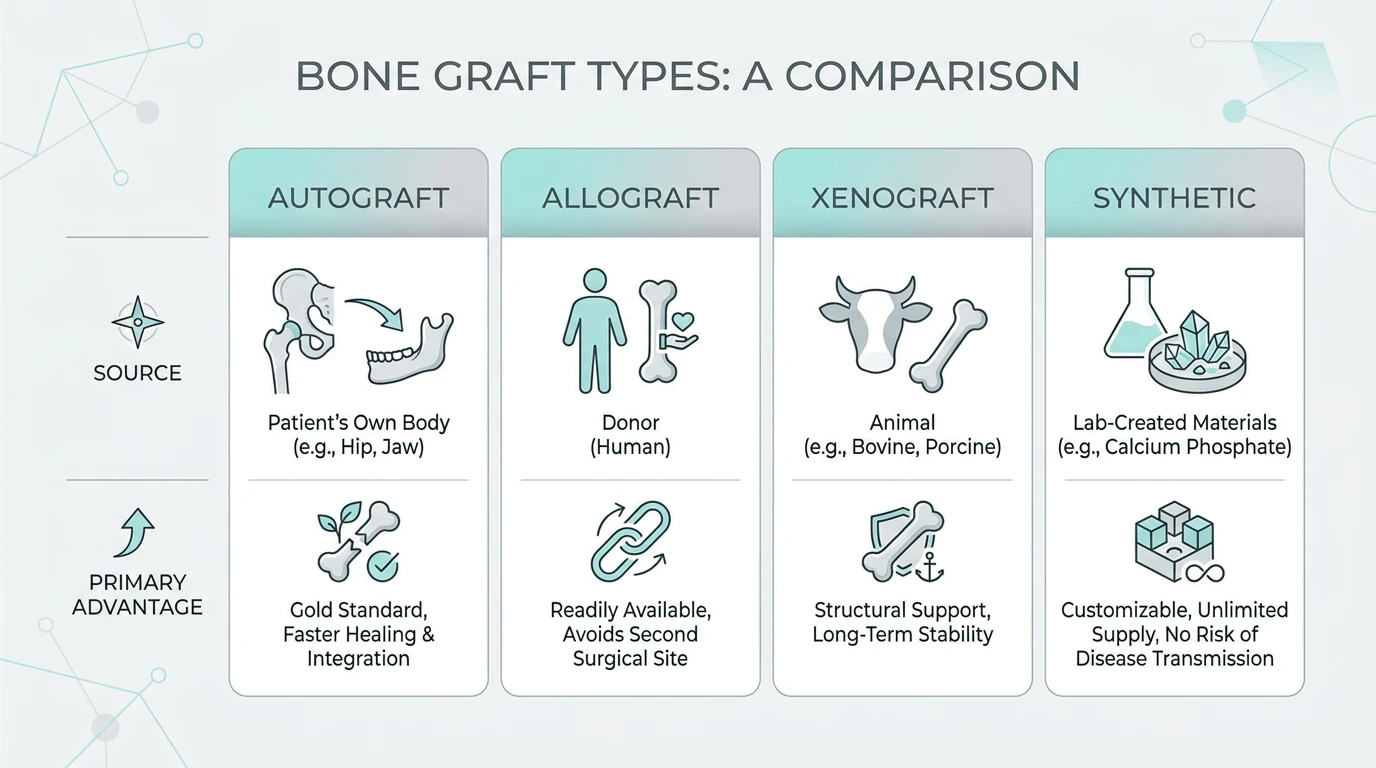
During Brittany's consultation, Dr. Taimour Raja reviewed the four primary material options used in oral bone augmentation:

  • Autografts: Tissue harvested from another area of the patient's own body, offering living cellular components.
  • Allografts: Rigorously screened and processed human donor bone from accredited tissue banks that promotes rapid host remodeling.
  • Xenografts: Specially treated mineral bone derived from bovine sources that breaks down slowly to provide long-lasting scaffolding.
  • Synthetic grafts: Laboratory-engineered mineral compounds, such as calcium phosphate, that provide an entirely artificial scaffold for natural bone growth.

Dr. Raja recommended a trusted mineral allograft for Brittany's lower jaw. The choice eliminated the need for a secondary donor surgical site while providing an optimal balance of structural support and gradual cellular replacement.

A dental comparison chart outlines the sources and primary advantages of autograft, allograft, xenograft, and synthetic bone graft types using icons and text.

Why Jawbone Loss Happens After Tooth Loss

Natural jawbone tissue requires ongoing stimulation from chewing forces to maintain its density and structural volume. When a natural tooth root is extracted or lost, the alveolar bone in that area no longer receives functional pressure. Within the first year following an extraction, the jaw can lose up to twenty-five percent of bone width.

Dr. Taimour Raja showed Brittany clinical imaging of her lower jaw. The visual demonstrated how the bone ridge had tapered inward since her molar extraction four years earlier. Without tooth roots engaging the jaw, the body gradually resorbs the unneeded minerals.

Beyond missing teeth, progressive gum infections can also destroy bone support around natural roots. Advanced periodontal treatment is often necessary to stop tissue loss before restorative rebuilding can begin. Brittany realized that her delayed replacement was the direct cause of her bone atrophy.

A callout graphic with a ribbon tab features the text Preserving Natural Ridge Volume above a line drawing of a lower jawbone.

Schedule Your Bone Health Consultation

If you are considering tooth replacement or have been told you have jawbone loss, our experienced team is here to help. Contact iSmile Dental Fairfax today to schedule an evaluation with Dr. Taimour Raja and discuss whether bone grafting can restore your smile.

Smiling front desk team member at the iSmile Dental Care reception desk handing a clipboard to a patient.

When Do You Need a Bone Graft?

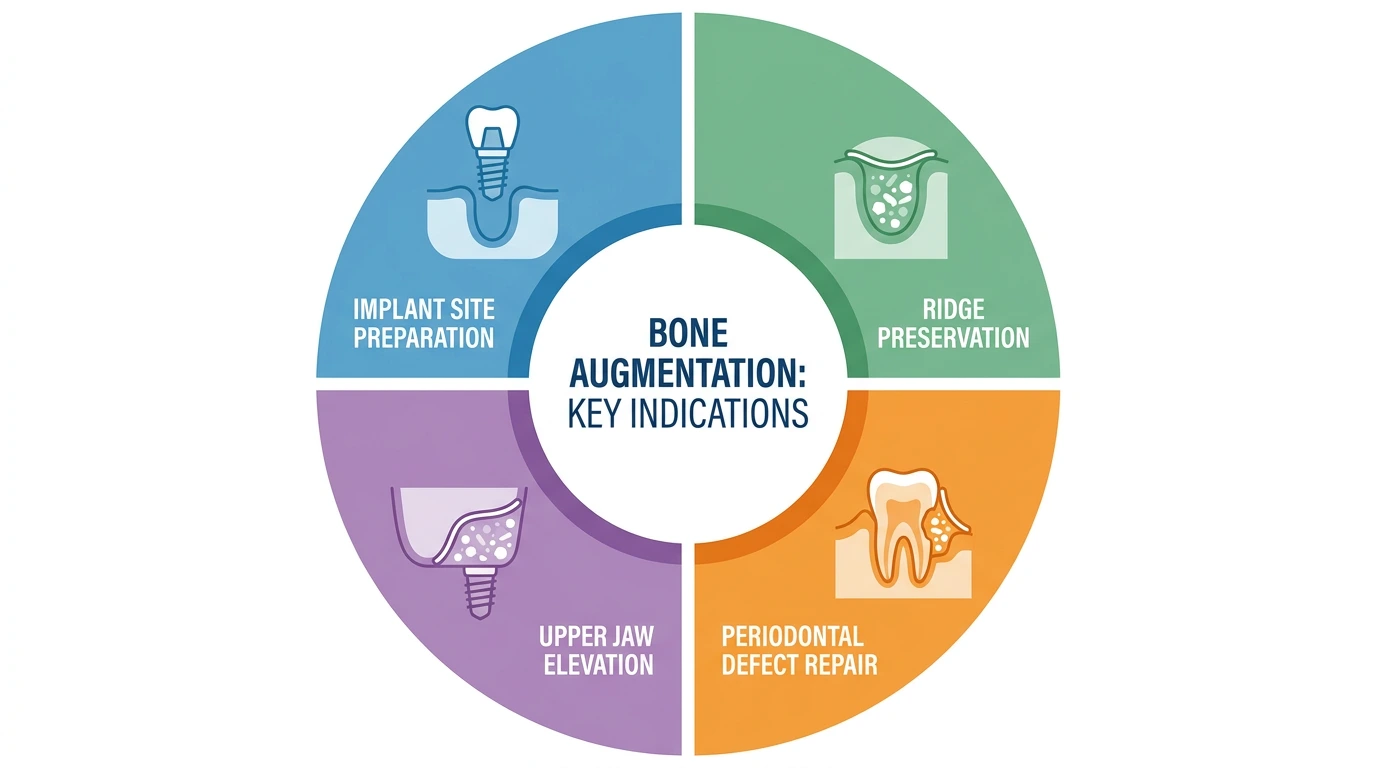
A patient needs bone augmentation whenever natural bone volume cannot mechanically support teeth, implants, or facial aesthetics. A clinical assessment identifies whether localized resorption threatens neighboring teeth or limits restorative options. If you’re asking yourself, “Do I need a bone graft?” the answer usually leads back to evaluating the timeline since tooth loss.

Dr. Raja evaluated Brittany's clinical records and outlined the primary situations where grafting becomes essential:

  • Implant site preparation: Rebuilding narrow or shallow ridges so a titanium post has sufficient bone depth for long-term stability.
  • Ridge preservation at extraction: Placing graft particles immediately into an empty socket following tooth extractions to prevent future collapse.
  • Periodontal defect repair: Reconstructing bone pockets caused by chronic periodontal disease to save natural teeth from loosening.
  • Upper jaw elevation: Undergoing sinus lift surgery to create sufficient vertical height beneath the sinus cavity for upper back teeth.

Brittany's circumstances aligned squarely with implant site preparation. Because her ridge was thin, Dr. Raja advised augmenting the site before placing her replacement tooth.

Circular infographic titled Bone Augmentation: Key Indications, with four colored quadrants for implant site preparation, ridge preservation, periodontal defect repair and upper jaw elevation.

What to Expect During Bone Graft Recovery

Post-procedure recovery is typically smooth and easily managed with standard oral home care instructions. Most individuals report mild swelling and manageable soreness rather than acute pain over the first several days. Daily routines can usually resume within twenty-four to forty-eight hours following the appointment.

Dr. Taimour Raja walked Brittany through her expected healing timeline. He emphasized that complete internal regeneration takes between three and six months. During that period, the body continuously converts the graft granules into solid living jawbone.

Brittany asked how to best protect the surgical site during her early recovery. Dr. Raja advised her to stick with soft foods, avoid drinking through straws, and rinse gently with warm saltwater. Adhering to these guidelines protects the initial blood clot and promotes undisturbed tissue repair.

A patient sits at a sunlit marble kitchen counter eating a blended berry smoothie from a bowl next to a glass of water and aftercare instructions.

How Bone Grafts Prepare You for Implants

Receiving a bone graft for implants creates the structural anchor required to sustain normal chewing forces for years ahead. Without sufficient bone mass around an implant, the artificial root cannot fuse properly with the surrounding anatomy. Regeneration ensures the new root rests securely within dense, healthy bone tissue.

Dr. Taimour Raja outlined why an augmented ridge produces far better long-term implant outcomes for Brittany:

  • Robust osseointegration: New bone growth fuses firmly against the implant threads, providing exceptional stability.
  • Natural gum contours: Reconstructed ridge width allows the gum tissue to frame the future crown with pleasing aesthetics.
  • Adjacent tooth protection: Strengthening the local ridge supports neighboring roots and prevents drift.
  • Balanced chewing distribution: A properly seated implant distributes occlusal force evenly across the arch to avoid premature wear.

With a restored ridge, Brittany could eventually receive dental implants that match the strength of natural teeth. Dr. Raja assured her that building the bone first was the most reliable pathway forward.

Pale teal callout box with the text Healthy Bone Structure, framed by quotation marks, a bone icon and a shield emblem.

Restoring Oral Health and Long-Term Stability

Understanding bone regeneration transformed Brittany's perspective on tooth replacement. Instead of viewing the graft as an inconvenient extra hurdle, she recognized it as the necessary foundation for a confident smile. Her initial anxiety about bone loss dissolved once Dr. Taimour Raja provided a clear clinical roadmap for her care in Fairfax.

A few months after her minor grafting procedure, modern imaging confirmed that healthy new bone had integrated across Brittany's lower ridge. Dr. Raja noted that the rebuilt area displayed ideal density and vertical height. The patient experienced minimal downtime and felt completely comfortable throughout her quiet healing interval.

Taking the time to reconstruct lost bone ensures that future restorations remain stable and functional for decades.

Brittany expressed deep gratitude for the personalized guidance she received, knowing her mouth was fully prepared for her final crown.

Investing in bone health today preserves the structural integrity of your entire smile for tomorrow.

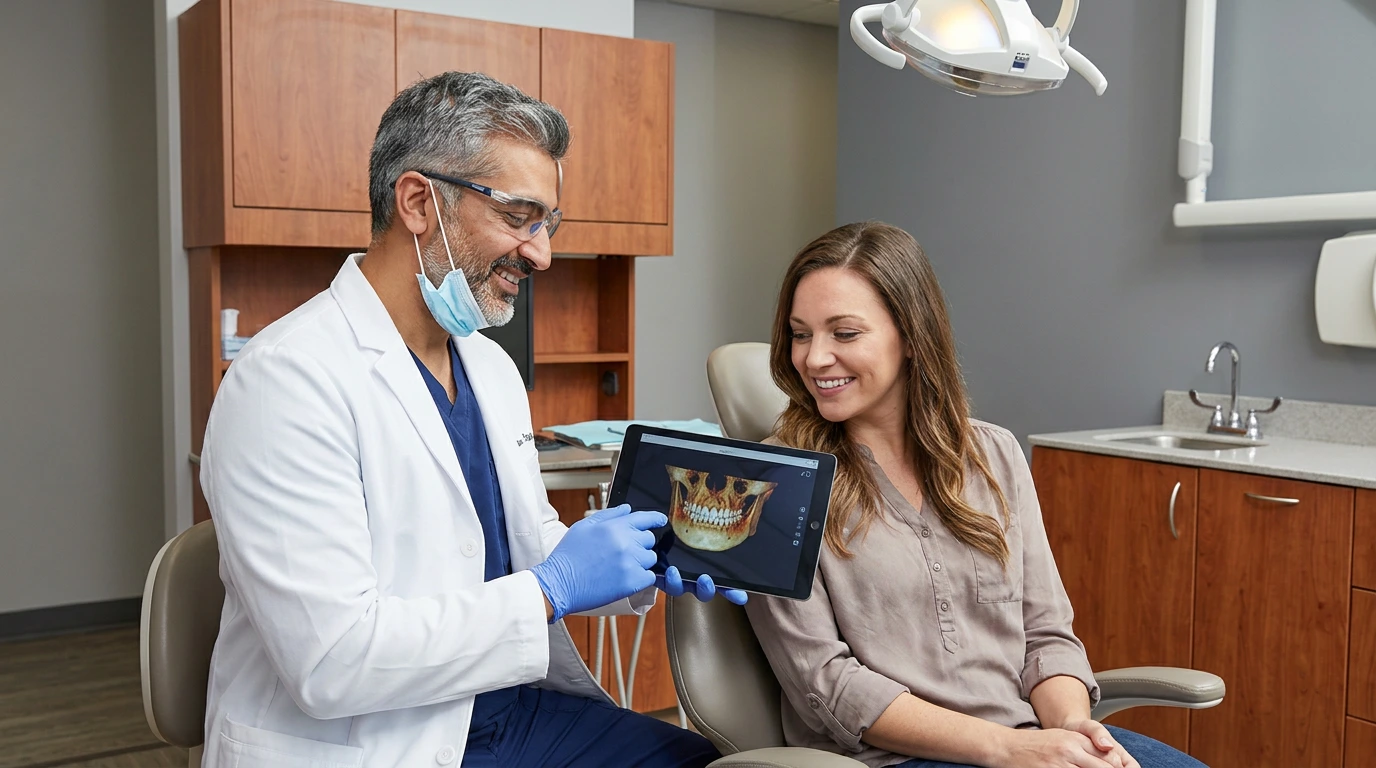
Wearing a lab coat and gloves, Taimour points to a 3D jaw scan on a tablet for a patient as she sits smiling in a dental chair.
Categories:
No items found.

Frequently Asked Questions

1. What does a dental bone graft feel like?
The treatment itself is performed under local anesthesia, so patients feel gentle vibration and light pressure rather than pain during the visit. Afterward, mild swelling and soreness are common for a few days, which patients easily manage with over-the-counter pain relievers and cold compresses.

2. How long does bone graft recovery take?
Initial soft tissue healing over the surgical site usually takes one to two weeks, allowing patients to resume normal routines quickly. However, the biological process of turning graft material into dense, mature living bone beneath the gums typically requires three to six months before implant placement.

3. Can a dental bone graft fail to heal?
While bone grafts carry an exceptionally high clinical success rate, complications like early infection, trauma, or uncontrolled medical conditions can hinder healing. Dr. Taimour Raja carefully screens health history and provides thorough aftercare guidelines to protect the graft site and ensure dependable, long-lasting bone integration.

4. Is a bone graft always necessary before an implant?
A graft is only required when the natural jawbone lacks the height, width, or density needed to securely anchor a dental implant. Patients who replace missing teeth promptly after an extraction frequently have sufficient natural bone and can proceed with implant surgery without additional augmentation.

5. Where does the bone graft material come from?
Modern bone grafting utilizes sterilized human donor tissue, bovine mineral matrix, synthetic mineral compounds, or tissue harvested from the patient's own jaw. Dr. Raja selects the optimal material based on the size of the defect, anatomical location, and individual restorative goals.

6. What foods should I eat after bone graft surgery?
Patients should eat soft, nutrient-dense foods such as yogurt, warm soups, scrambled eggs, mashed potatoes, and smoothies eaten with a spoon during initial healing. Avoiding hard, crunchy, very hot, or spicy foods prevents mechanical irritation to the delicate gum tissues protecting the graft.

Ready to Love Your Smile?

Get the confident, healthy smile you deserve with personalized dental care in Fairfax, VA. At iSmile Dental Care, we focus on comfort, clarity, and long-term oral health, making it easy to take the next step toward a smile you feel good about.

Now Welcoming New Patients

Book Your Appointment Today

Office Hours

Ready to make an appointment? We can't wait to welcome you to our dental family!

  • Monday 9:00 AM - 6:00 PM
  • Tuesday 9:00 AM - 6:00 PM
  • Wednesday 9:00 AM - 6:00 PM
  • Thursday 9:00 AM - 6:00 PM
  • Friday 9:00 AM - 5:00 PM
  • Saturday 9:00 AM - 3:00 PM
  • Sunday Closed

Location

9428 Main St, Fairfax, VA 22031

Thank you for booking your appointment!

We’ve received your request and will contact you soon to confirm the details. We look forward to seeing you at iSmile Dental Care!

Oops! Something went wrong while submitting the form.
RELATED BLOG POSTS

Stay Informed with Expert Insights & Tips About Dental Care

10.7.2026

Athletes Need Custom-Fitted Mouthguards: Here's Why

Athletes gain superior dental protection and enhanced performance during sports with custom-fitted mouthguards designed for their unique needs.

9.8.2026

Does Blue Cross Blue Shield Cover Dental Care?

Understanding your Blue Cross Blue Shield dental coverage, including plan types, covered services, and financial terms, helps maximize your benefits for optimal oral health.

8.6.2026

Is Dental Bonding Right for Your Smile?

Dental bonding offers a versatile and cost-effective way to correct minor smile imperfections like chips, gaps, or discoloration, enhancing confidence.